
A car review can sound genuine and still describe a car its author has never owned. It can also sound unusually polished because a real owner used AI to tidy up a rough draft. Those are different problems, and a detector score cannot reliably tell you which one you are looking at.
When shopping, focus less on whether a review sounds human and more on whether it contains a coherent, checkable account of living with that exact vehicle. For cars, useful evidence tends to be stubbornly specific: trim, drivetrain, mileage, time owned, repair history, and the way a vehicle is actually used.

Start with the experience, not the writing style
AI tools can produce smooth paragraphs quickly, but smoothness is not evidence of ownership. Nor is a typo, a blunt tone, or a clumsy sentence evidence that a person wrote it. A genuine owner may use software to edit their words; a fabricated review may be deliberately made messy.
Instead, look for a chain of details that fit together. Does the writer identify the model year and trim? Do the mileage and time-owned claims make sense together? Are the observations grounded in a real routine, such as a long commute, winter starts, child-seat installation, towing, or repeated trips to a dealer for the same fault?
One detail alone proves little. A fake can include a model name or an impressive-sounding mileage figure. What matters is whether several specifics combine into an account that is internally consistent and relevant to the decision you face.
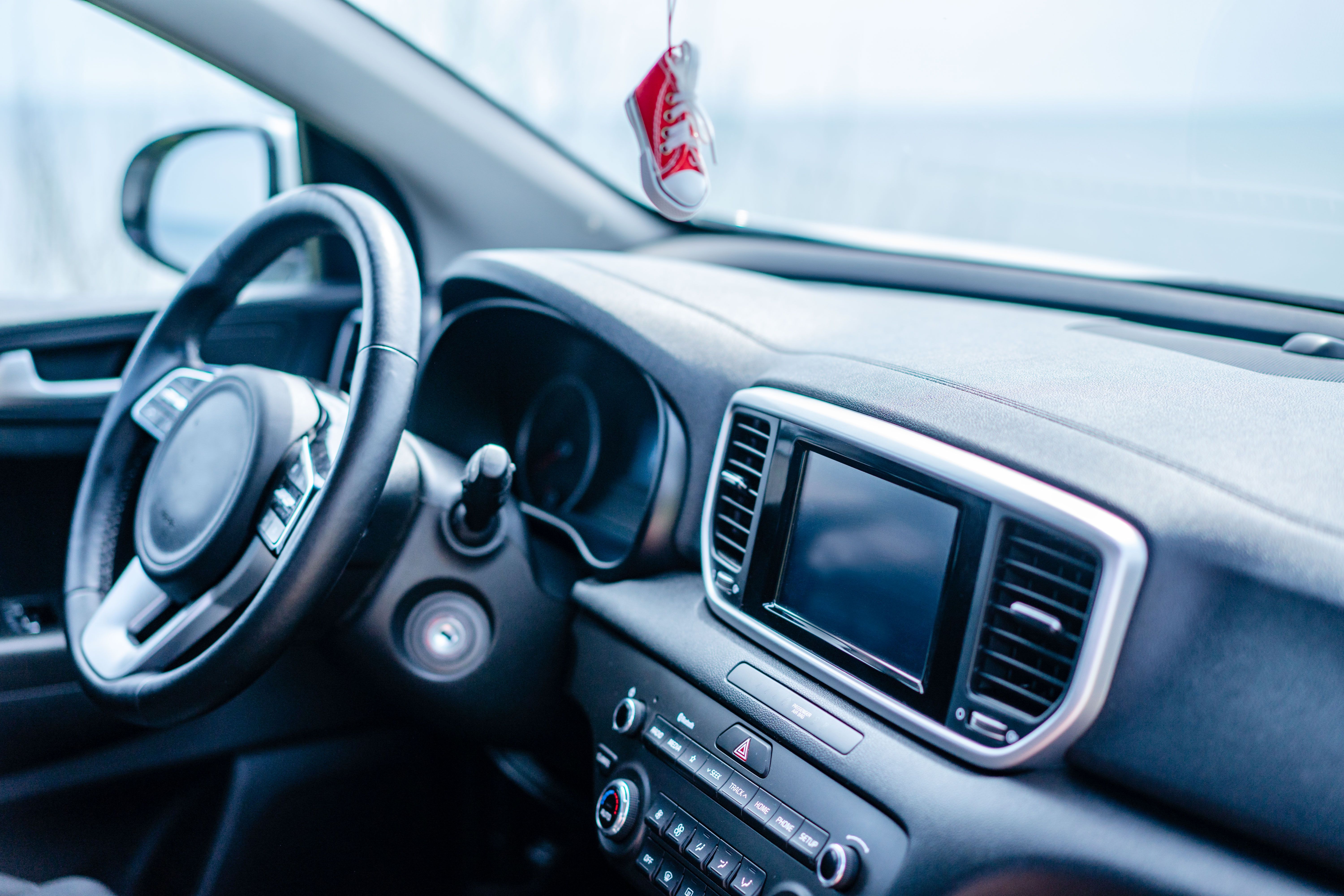
What a useful owner review tends to reveal
Look for details that help you picture ownership rather than a showroom walkaround. A useful review might explain that the driver’s seat becomes uncomfortable after a particular kind of trip, that a phone disconnects during a commute, or that the cargo opening is awkward for a specific everyday item. Even negative reviews can be grounded: a clear description of what happened, when it happens, and whether it was fixed is more useful than “terrible reliability.”
- Identity: model year, trim, engine or motor, drivetrain, and options where relevant.
- Time and use: approximate mileage, ownership period, route, climate, passenger load, or towing needs.
- Consequences: what the issue changed in daily use, what a repair involved, or what the owner would choose differently.
- Balance: a mix of advantages and trade-offs that reflects priorities, rather than a string of universal superlatives.
Specificity is not a authenticity certificate. Treat it as a lead to verify: search for the same issue in other owner accounts, check whether the detail applies to that model year, and compare the claim with a service record or inspection when you are buying a used car.
Watch for patterns across a batch
A single generic review is hard to judge. A cluster can tell you more. If many reviews appear close together, repeat the same unusual phrases, praise identical features in the same order, or make nearly interchangeable claims despite supposedly different owners, look for independent accounts elsewhere.
The Federal Trade Commission advises consumers to read reviews across sources, consider who wrote them and their history, and not rely on star ratings alone. Its U.S. Consumer Reviews and Testimonials Rule, effective October 21, 2024, addresses commercial practices including creating or buying reviews that misrepresent whether a reviewer exists, used a product, or had the experience described. The rule is about deceptive conduct, not a blanket ban on AI-assisted writing.
For a car, cross-check the review against a second platform, owner discussions, and vehicle-specific service or recall information. A verified-purchase badge can be useful context, but it only speaks to a platform’s verification process; it does not prove that every statement is accurate or that the reviewer has extensive experience.
Why an AI checker cannot settle it
An AI checker may give you a reason to read more closely, but its result is not proof that a car review was generated or that its supposed owner is invented. These tools analyze language patterns, not a reviewer’s garage, maintenance invoices, or driving history.
A 2023 study by Weixin Liang and colleagues, published in Patterns, tested seven AI-text detectors against 91 essays written by Chinese students for the TOEFL and 88 essays by U.S. eighth-grade students. In that particular dataset, the detectors had an average false-positive rate of 61.3% on the TOEFL essays. The study examined essays, not car reviews, and it does not measure today’s tools; it is a concrete warning against treating a detector’s label as a verdict.
There is a reasonable case for using a detector as a low-stakes triage signal when a whole batch of reviews also looks suspicious. But I would not reject an individual owner’s account on that basis. The better question is whether its factual claims withstand ordinary cross-checking.

A quick check before you trust a review
- Identify the exact year, trim, and equipment being discussed. Reviews of a different powertrain or model year may not answer your question.
- Check the reviewer’s history and the dates. A sparse account or a sudden burst is a prompt to investigate, not proof of fraud.
- Search a distinctive claim or phrase alongside the vehicle name. Repeated identical wording across supposedly unrelated accounts is more telling than polished grammar.
- Compare the same issue across independent sources, and check whether it is consistent with the vehicle’s known specifications or ownership requirements.
- For an expensive used car, verify the vehicle itself. Ask for maintenance documentation and get an independent inspection; an online review cannot establish the condition of the specific car for sale.
When the stakes are a purchase, let reviews help you decide what to inspect and ask about. Do not ask them to prove a stranger’s identity. A real review can be edited by AI, a generated review can imitate an owner, and a detector can be wrong. The most useful review is the one that gives you a concrete claim you can check.
How this article was put together
This guide separates writing assistance from fabricated experience and focuses on checks a car shopper can make. It draws on the current U.S. eCFR text for the FTC Consumer Reviews and Testimonials Rule, the FTC’s consumer guidance on assessing online reviews, and Liang et al.’s 2023 detector study. That study concerns essays, not automotive reviews, so its results are presented as a caution about detector certainty, not as a measurement of car-review detection. Legal details were checked on November 18, 2026.